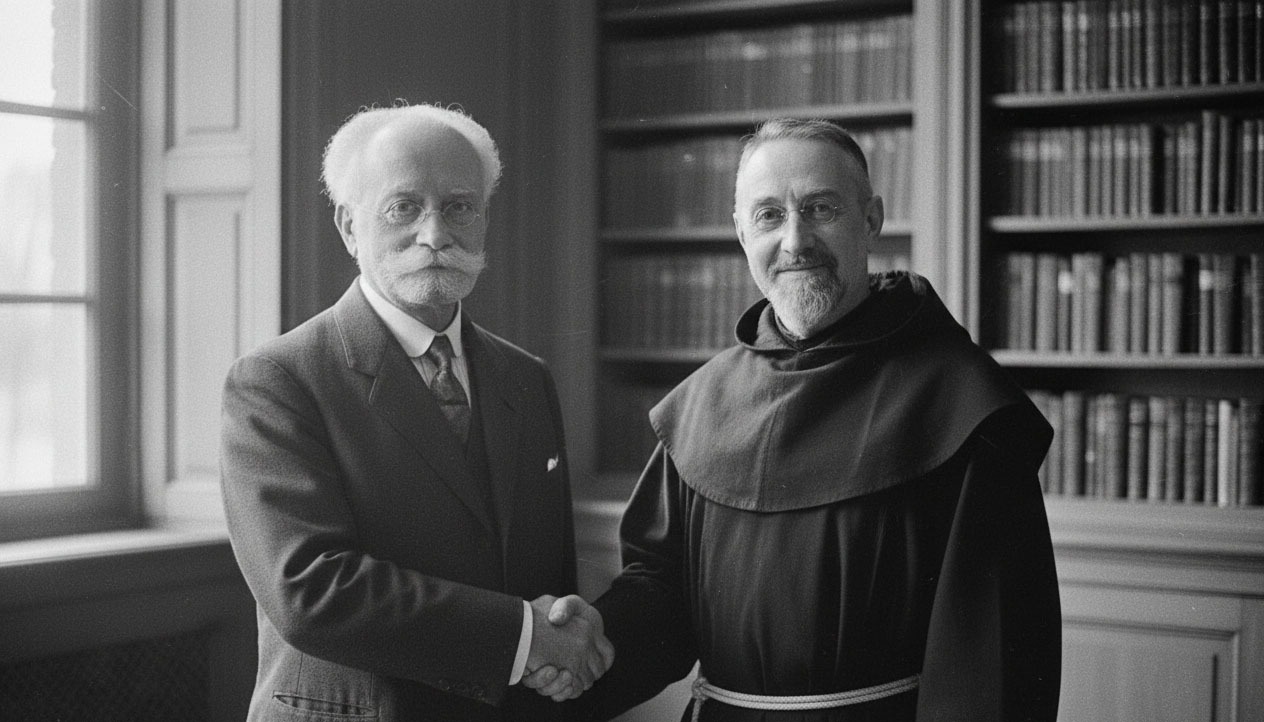
José Gonzalo Zulaica Arregui, better known in the world of art and music as P. Donostia (1886-1956), was a composer, folklorist, musicologist, and lecturer born in Donostia / San Sebastián. His music, with its highly personal style, has its roots in the tradition of Gregorian chant and European polyphonic music from the Golden Age (Tomás Luis de Victoria, Guerrero, etc.). Another of its fundamental roots is the Basque folk tradition. Both traditions are renewed because he is inspired by the technical innovations of his French impressionist contemporaries: Debussy, Ravel, Roussel. An example of his work as a folklorist is his Cancionero Vasco / Euskel Eres-Sorta (Basque Songbook), which in 1922 already offered 393 melodies collected by him in places in Baztán and the Basque Country. Father Donostia is well known for his Preludios Vascos (Basque Preludes) for piano, in which he recreates Basque melodies not literally, but through the space of suggestion that the Impressionists worked so hard to achieve. His religious music is based on Gregorian chant but is developed and inspired not by pure “saying” but by the “suggestion” of his French masters, Debussy and Ravel foremost among them. Three examples attest to this: his Requiem and his musical illustrations with libretto by Heri Ghéon: Les trois miracles de Sainte Cécile and La vie profonde de Saint François d’Assise. All his musical and musicological output was collected in his Complete Literary Works, comprising a dozen volumes, and in his Complete Musical Works, comprising 12 volumes.
The Digital Bible Foundation has included Fr. Donostia in the Humanists of the eBible for his contribution to the epistolary genre, particularly the letters he exchanged with the musician and musicologist Felipe Pedrell, whose disciple he was alongside Enrique Granados, Manuel de Falla, Robert Gerhard, and Rosa Ascot. This correspondence has been published in eBook and paper format: “Al unísono estamos” (We are in unison). Donostia-Pedrell Correspondence 1915-1918.
